

Certified Personal Stylist & Owner of Style Fix Studio in Boston, MA
Closet Audit | Color Analysis | Personal Styling
StyleFixStudio.com
The “no white after Labor Day” rule has been passed down through generations as a fashion commandment. But is it a real fashion rule, or just an old social custom that lost its relevance decades ago? As a certified personal stylist, I hear this question every September. This article covers where the rule came from, why it no longer applies, and exactly how to wear white year round with confidence.
Quick Answer: Can You Wear White After Labor Day?
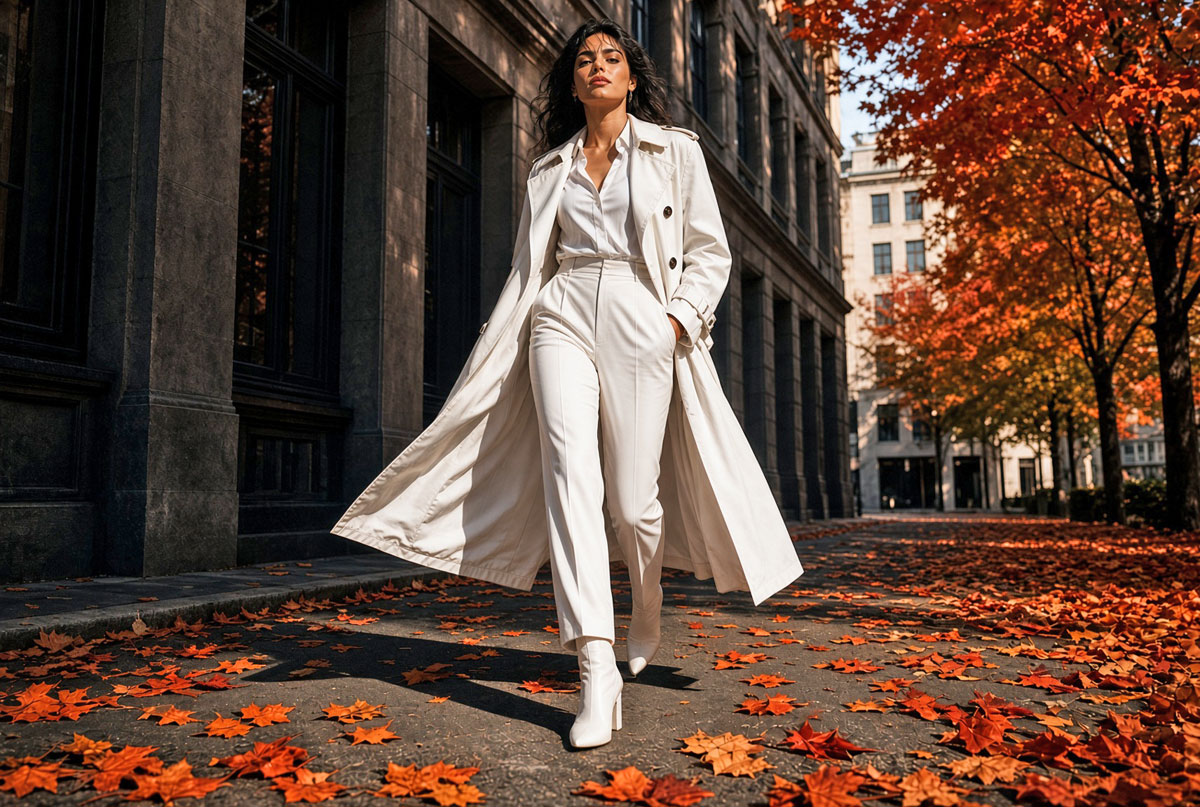
Short answer: yes. The “no white after Labor Day” rule is now considered outdated. No designer, stylist, or fashion editor working today treats it as a real guideline. The rule against white after Labor Day is a relic of 19th-century social customs, not a current style standard.
Modern fashion focuses on context, fabric weight, and proportion rather than a strict calendar date. A pair of white jeans in October works if you pair them with the right textures and deeper tones. A cream wool coat in January looks polished, intentional, and seasonal.
If you feel unsure about how to wear white clothes beyond the summer months, Style Fix Studio’s Signature Online Styling can help you build outfits tailored to your body, coloring, and life. Read on to learn the history behind this old rule and exactly how to break it.
Where the “No White After Labor Day” Rule Came From
The rule against white after Labor Day began in the late 1800s, rooted in the social customs of America’s Gilded Age. Wealthy families wore white clothing during summer vacations at seaside homes in Newport, the Hamptons, and similar resort towns. White clothing signaled social status and cleanliness in the Gilded Age; only those with enough money and household staff could keep white garments spotless.
When Labor Day arrived (the first Monday in September, established as a federal holiday in 1894), high society packed away their resort whites and shifted to darker clothing for city life. Practical weather considerations led to a switch from white to darker garments in autumn. The seasonal clothing tradition originally stemmed from practical dressing before air conditioning: dirty streets, coal dust, and muddy roads made white nearly impossible to maintain through fall and winter.
The rule served as a form of social signaling to differentiate the wealthy from the working class. It was never a law. It was an unwritten code enforced by upper class social circles as a way to identify who “belonged.” Etiquette guides began reinforcing the rule in mid-20th century fashion culture, and fashion magazines played a key role in popularizing seasonal wardrobe changes. As ready-to-wear fashion and washing technology improved, the rule gradually lost its original purpose, but the tradition lingered across generations.
Why the Labor Day Rule No Longer Makes Sense

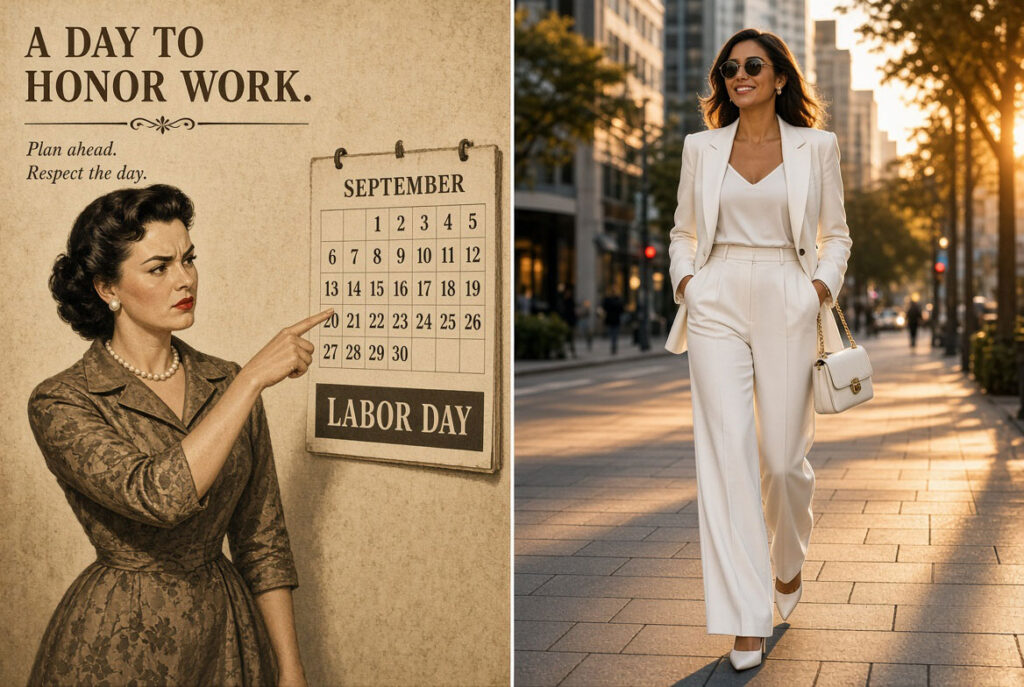
The Gilded Age conditions that created this rule have disappeared. Climate-controlled offices, cars, and public transit mean we spend most of our time in temperature-neutral environments. Wealthy Americans wore lightweight white clothing in summer to stay cool; that logic doesn’t apply when your commute is 68°F year round.
Fabric technology has changed, too. Today’s style emphasizes fabric weight and texture over strict color rules. Stain-resistant finishes, better detergents, and washable blends make white clothing practical in seasons when it once would have been ruined by a single rainy walk. In a 2026 U.S. consumer survey, 61% of respondents said they would pay more for stain resistance in their garments.
Coco Chanel popularized wearing white in non-summer months as early as the 1920s, proving the old rule was already breakable a century ago. Coco Chanel popularized wearing white in winter months, and fashion has followed her lead ever since. Vogue published a 2023 analysis concluding, “We don’t live in the Gilded Age anymore.” Modern fashion emphasizes personal expression over rigid rules, and fashion today encourages breaking old norms and experimenting with what suits your body and life.
At Style Fix Studio, we help clients rewrite outdated rules, including the white after Labor Day rule, in favor of what actually flatters their shape, coloring, and schedule.
How to Wear White After Labor Day and Still Look Seasonal
The question is not whether you can wear white. It is which white pieces you choose and how you style them for cooler weather. Three principles guide every outfit: texture, shade, and balance.
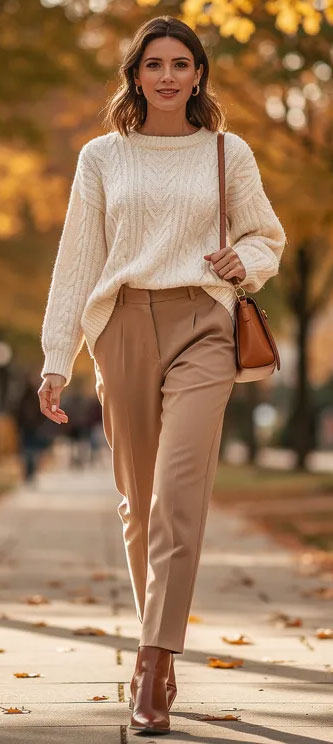
Think white jeans with a camel sweater and ankle boots. An ivory turtleneck with charcoal trousers. A winter-white coat over dark denim. Each of these outfits reads fall or winter, not summer, because the fabrics and accessories anchor the look in the right season.
Choose Fall-Ready White Fabrics and Textures
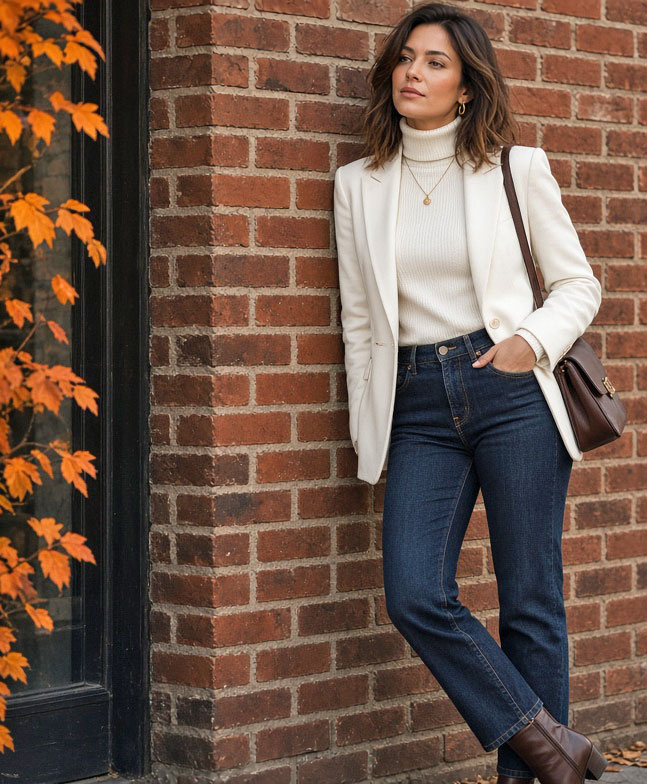
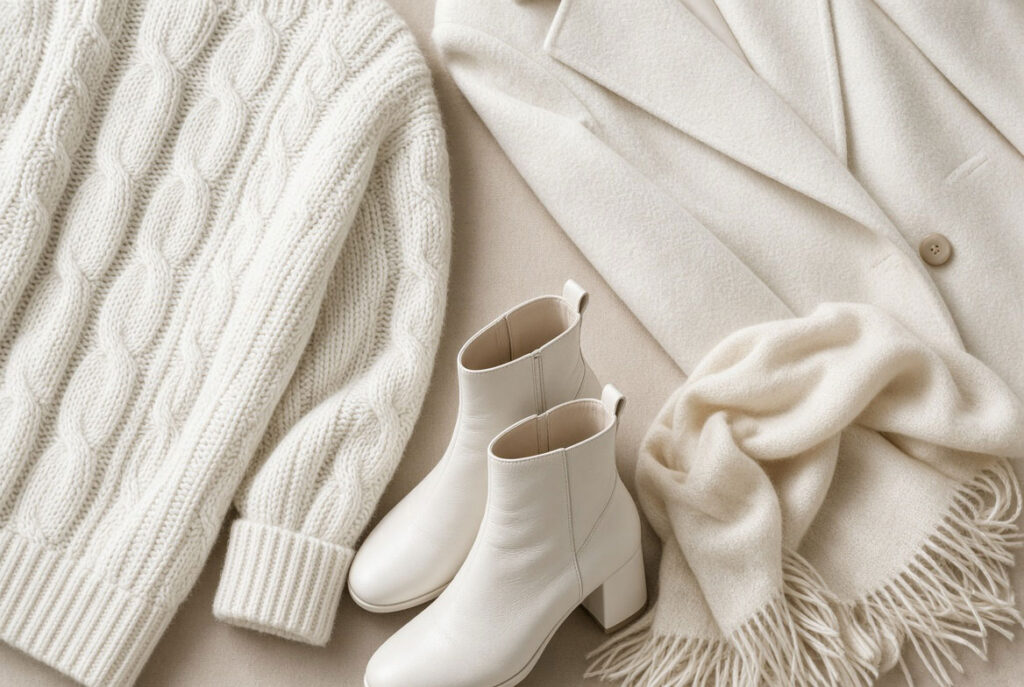
Swap breezy summer textiles (linen sundresses, sheer cotton tops) for structured white denim, twill trousers, ponte pants, and cable-knit sweaters after Labor Day. The fabric makes the difference. Winter white fabrics like wool feel seasonal and cozy. Winter white fabrics include wool and cable-knit cotton, both of which carry visual weight that matches the season.
Crisp white denim pairs well with knit sweaters. Crisp white denim works well in cooler months when you choose a mid-weight or heavyweight weave. Other strong fall and winter white pieces: an ivory fisherman sweater, an off-white blazer, a cream wool coat, and an ivory sweater dress. Heavier fabrics automatically make wearing white after Labor Day feel seasonally appropriate, even in December. For help finding quality fabrics that work for your body type, a personal shopping session can save hours of trial and error.
Shift from Bright White to Cream, Ivory, and Winter White
There is a difference between a crisp white piece in optic, blue-toned white and a softer shade like cream, ivory, bone, or eggshell. Softer shades carry warmer undertones (golden, peach) that feel natural against fall’s muted palette. Layering similar shades adds depth to fall outfits: try a cream turtleneck with taupe trousers, an ivory blouse with a chocolate-brown skirt, or a monochrome winter-white look with beige boots.
Layering similar shades adds depth to white outfits overall, creating a tonal effect that reads as intentional rather than accidental. A personal color analysis determines whether your skin, hair, and eyes look best in cool whites or warm whites. If you have ever felt “washed out” in bright white, the problem is likely the shade, not the idea of wearing white itself.
Ground White Pieces with Rich, Dark Neutrals
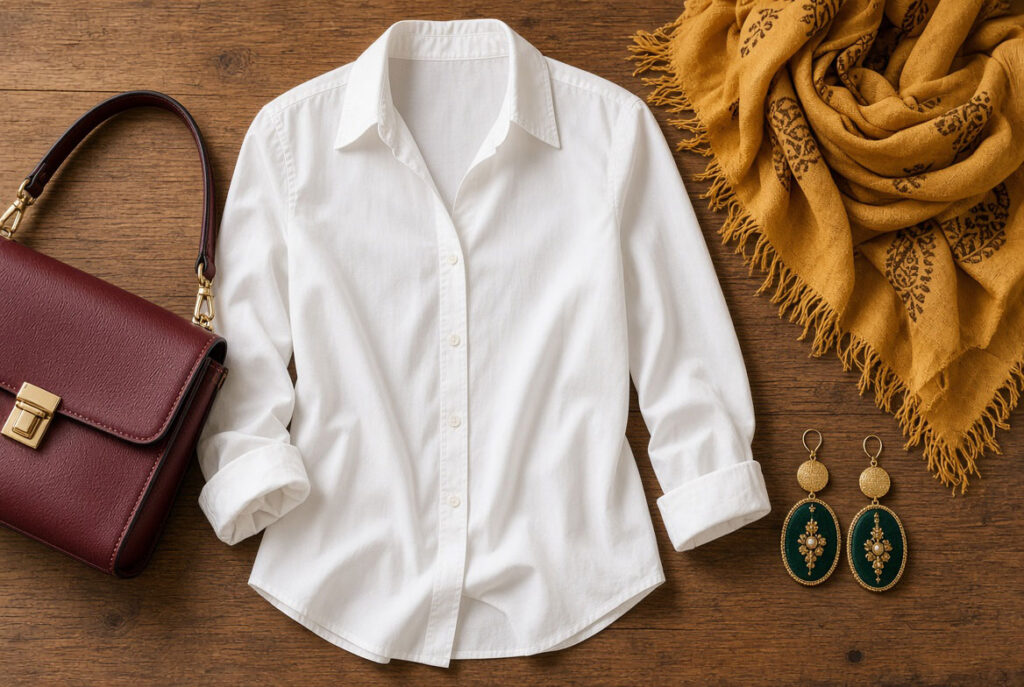
Ground white pieces with darker clothing for fall. Pairing white with deeper tones makes the outfit look anchored and seasonal instead of beachy. Try white jeans with a navy or forest-green sweater, an ivory blouse under a black leather jacket, or a cream knit with burgundy trousers.
Accessories do the same work: tan or cognac boots, black loafers, dark belts, and structured handbags in chocolate brown all ground white garments. White boots are stylish for fall outfits, especially when paired with dark denim or a rich-toned dress. Tall boots in ivory or cream add a fresh fashion trend to any cooler-weather look. In a virtual styling session, Style Fix Studio builds digital outfit formulas showing clients exactly how to repeat these mix-and-match pairings with pieces already in their closet.
White Clothes for Different Body Types and Lifestyles
The myth that “white makes everyone look bigger” is incomplete. Fit, fabric weight, and placement matter more than color alone. A structured white blazer in a tailored cut creates a clean line on any body shape. A pair of white pants in a heavier ponte fabric smooths rather than clings.
Use white to highlight features you love. White tops draw attention upward; white jeans celebrate your legs. Where you prefer less emphasis, mix in richer tones. For busy professionals, a white blazer with dark slim pants works from the office to dinner. For parents of young kids, washable white denim and sneakers stay practical. For city commuters, a cream puffer or trench over black basics is both cute and functional.
During a Signature Wardrobe Makeover, Style Fix Studio evaluates each client’s proportions and schedule to decide which white pieces are worn year round and which are better swapped. For more on dressing for your body shape, check our guide.
Sustainable Style: Keeping White in Rotation Year Round
Wearing white year round instead of packing it away after Labor Day means you get more cost-per-wear from each piece. That supports a more sustainable wardrobe: fewer items, worn more often, over a longer season. High-quality fabrics make white clothing practical year-round and reduce the need for frequent replacements.
Invest in a small pack of well-cut white staples (jeans, shirts, knitwear) rather than cycling through cheap, see-through options. Simple care habits extend their life: wash whites in cooler water, air-dry delicate fabrics, and spot-treat stains the same day. During a closet audit, Style Fix Studio helps clients decide which existing white items to tailor, keep, donate, or replace with higher-quality, more timeless versions.
How Style Fix Studio Can Help You Wear White with Confidence
Style Fix Studio is a Boston-based personal styling and fashion consulting service offering both in-person and virtual styling nationwide. Our Signature Wardrobe Makeover combines a closet audit, personal shopping, and in-person try-on session to build white year round outfits tailored to your actual life.
Standalone services include color analysis (to find your best whites), virtual styling (to create lookbooks using your existing white pieces and white dresses), and professional photoshoots to capture polished outfits for LinkedIn, dating profiles, or business branding. Book a free initial consultation to ask questions about wearing white after Labor Day, updating your wardrobe, or any other style shift you have in mind.
FAQs About Wearing White After Labor Day
Is it really a fashion rule that you can’t wear white after Labor Day?
It is an old social custom, not a current fashion requirement. The no white after Labor Day rule originated as a social class marker among wealthy Americans in the late 1800s. No working stylist or designer enforces it anymore. It is not a fashion faux pas to wear white in any season.
What kinds of white clothes look best after Labor Day?
White jeans in heavier denim, white sweaters in cable-knit or wool, cream coats, and ivory blouses in structured fabrics all work through fall and winter. The easiest ways to make white look seasonal: choose heavier fabrics and pair with richer tones.
Can I wear white shoes in fall and winter?
Yes. White shoes can be worn year-round with various outfits. White sneakers, ivory loafers, and cream or white boots all pair well with darker denim, knitwear, and fall layers. Memorial Day through December and beyond; the calendar does not decide your shoe color.
How do I keep my white pieces from looking too summery?
Focus on texture, layering, and color balance. Swap sheer or lightweight fabrics for wool, denim, and knits. Pair white with camel, chocolate brown, burgundy, deep green, or charcoal. Add structured shoes and a belt to complete the outfit.
How can a personal stylist help me feel more confident wearing white year round?
A stylist customizes choices to your body shape, coloring, and lifestyle. Style Fix Studio identifies which shades of white (cool, warm, softer ivory) flatter you, recommends specific garments, and builds outfit formulas you can repeat. Schedule a consultation to get started.