
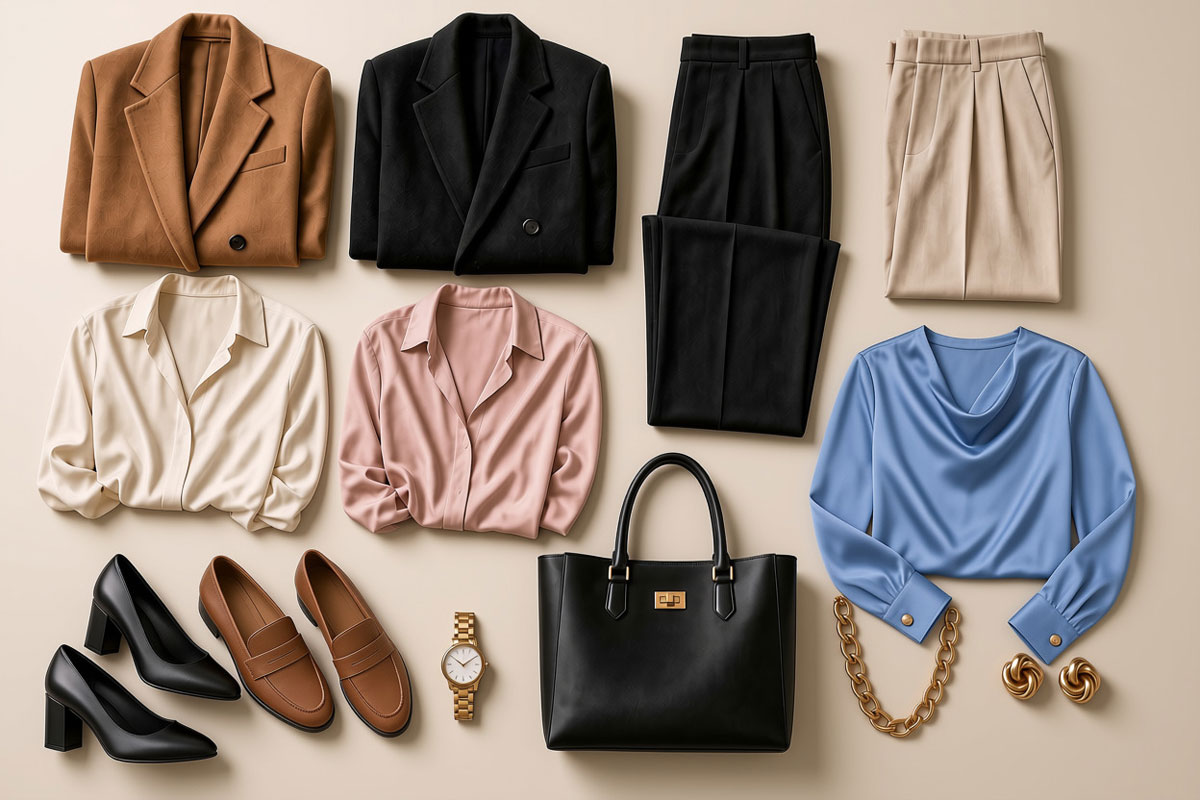

Certified Personal Stylist & Owner of Style Fix Studio in Boston, MA
Closet Audit | Color Analysis | Personal Styling
StyleFixStudio.com
As summer winds down and September rolls in, there’s a familiar shift in the air—kids head back to school, routines tighten up, and your office schedule suddenly demands real clothes again. If you’ve been staring at your closet wondering why nothing feels right, you’re not alone. After years of hybrid work, body changes, and evolving dress codes, most women I work with at Style Fix Studio are overdue for a back to work wardrobe reset.
Key Takeaways
- A back to work wardrobe reset is a focused edit, not a full closet overhaul — the goal is 5–10 mix-and-match business casual outfits.
- Start with a closet audit, then clarify your real dress code before you buy anything.
- Build 2–3 repeatable “uniform” formulas and 10–15 non-negotiable key pieces in a neutral palette.
- Fit, tailoring, and comfortable shoes matter more than trends.
- A personal stylist can shortcut the entire process with a closet audit, color analysis, and personal shopping.
Start Here: What A “Back To Work Wardrobe Reset” Actually Means
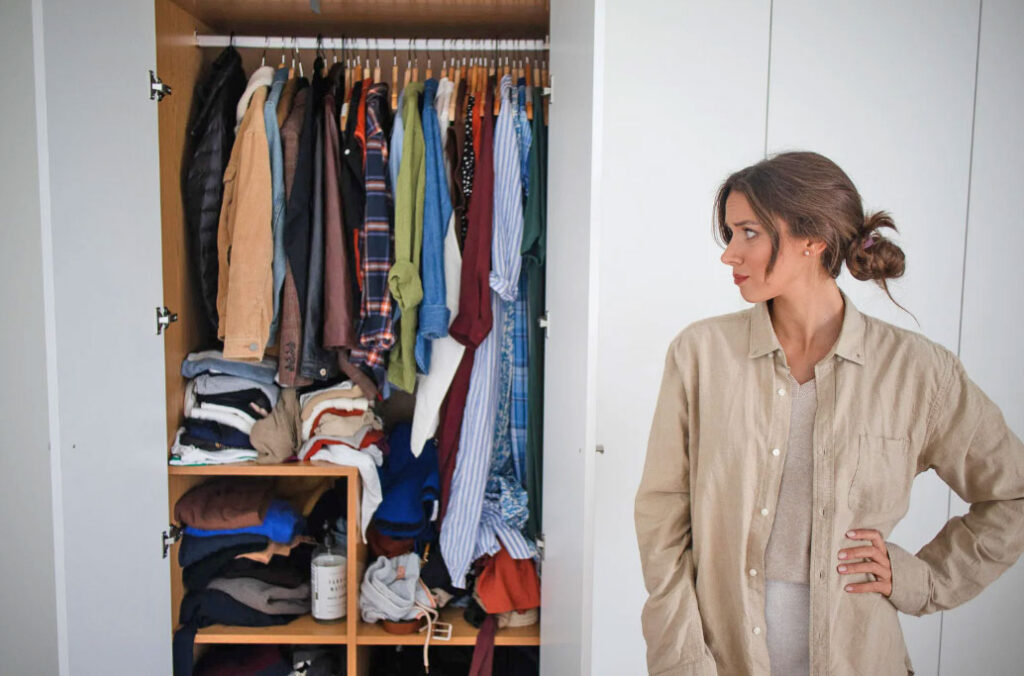
A back to work wardrobe reset is not about emptying your closet and starting from scratch. It’s a focused, strategic refresh of key pieces so that busy mornings feel easier and more intentional. Think of it as editing, not overhauling.
The goal is simple: build 5–10 mix-and-match business casual outfits that carry you through morning meetings, packed workdays, school pickups, and after hours plans-all from a small, versatile office wardrobe. Five outfits alone can simplify your return to the office when they’re built to coordinate. Capsule wardrobes emphasize versatility and fewer pieces that coordinate well, and that’s exactly the approach we’re taking here.
This guide is written for women navigating a return to office life after remote work, body changes, or a style rut. You don’t need a giant budget. You need clarity about what works for your life right now-and a plan to fill in the gaps.
Throughout this guide, I’ll point you toward services that can make the process even easier, including our Signature Wardrobe Makeover, Closet Audit, and Virtual Styling. But first, let’s dig into the steps.
Here’s what this reset will give you:
- Less morning stress and decision fatigue
- More confidence walking into any professional and social settings
- A faster getting-ready routine that actually sticks
Back to Work Wardrobe Reset: 12 Easy Steps
This effortless 12-step back to work wardrobe reset guide helps you transition from summer styles to polished office looks.
Step 1: Audit Your Existing Office Wardrobe Before You Shop

Before you buy things, you need to know what you already own-and what’s actually earning its place. A proper closet audit saves time, money, and the frustration of buying yet another black sweater you didn’t need.
Set aside 60–90 minutes. Pull out only your office wear: tailored trousers, blazers, blouses, midi skirts, dresses, work pants, and shoes. Try each piece on in front of a mirror. Sort everything into three piles:
- Love and fits right now – it’s comfortable, flattering, and suits your current dress code.
- Almost – needs tailoring or restyling – the fabric is great but the fit is off, or it needs a hem or waist adjustment.
- Release/donate – it doesn’t support your current body, lifestyle, or office wardrobe needs.
Pay attention to patterns. You may have five black sweaters but zero layering pieces like a neutral blazer, or plenty of heels but no comfortable flats.
For each item, ask yourself:
- Is this comfortable for a long workday?
- Does it match at least three other items in my closet?
- Does it still suit my current office dress code?
If this process feels overwhelming, you don’t have to do it alone. A Wardrobe Makeover with Style Fix Studio includes a full closet audit, personal shopping, and try-on session-all customized to your size, shape, and lifestyle.

Step 2: Clarify Your Real-Life Dress Code In 2026
Many offices in 2026 sit somewhere in the business casual range, especially in Boston and other major metro areas. According to Gallup’s workplace attire survey, 41% of U.S. workers now dress business casual most days, while traditional office suits have dropped to roughly 3% daily wear. Expectations shifted after remote work, and they haven’t fully snapped back.
For women’s workwear, business casual means tailored separates that look polished but don’t leave you feeling stiff-with room for personality in color, texture, and accessories. Here’s how to decode your specific workplace:
- Notice what your manager and senior leaders wear on presentation days.
- Check for any written HR guidelines or Slack announcements about clothing.
- Observe what people choose when clients visit versus regular team days.
Three common categories to know:
- Strict business casual: tailored pants or pencil skirts, blazers, closed-toe shoes, collared blouses. Common in finance and law. Business casual is more formal than smart casual.
- Relaxed business casual: dark denim on Fridays, breathable knits, neat sweaters, loafers. Typical in many corporate offices.
- Smart casual / creative casual: smart casual sits between casual and business casual. It blends tailored pieces with relaxed basics, allows for dark denim and polished footwear, and requires clean finishes and quality fabrics. Common in tech, media, and startups.
Clarifying this first prevents costly mistakes-like buying structured suits for a relaxed tech office, or jeans that never feel appropriate in a traditional office environment. Need help interpreting your dress code? Fashion styling and personal styling services can create custom outfit formulas for your exact workplace.

Step 3: Choose Your Workday “Uniform” Formulas (Business Casual Outfit Formulas)
A back to work wardrobe reset works best when you build 2–3 simple “uniform” formulas you repeat weekly with slight variations. Utilizing outfit formulas can speed up dressing in the morning and eliminate that paralyzing closet stare.
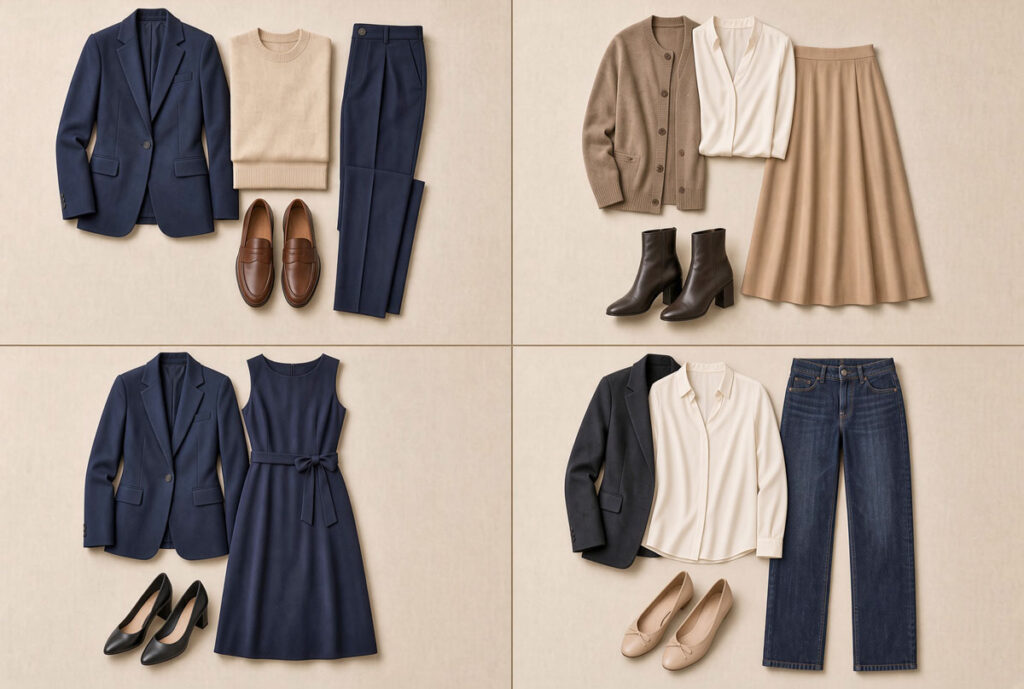
Here are four plug-and-play formulas for business casual:
- Formula 1: Slim or wide leg tailored trousers + fine knit tops or shell + tailored blazer + loafers or kitten heels. Tailored blazers elevate any outfit for the office.
- Formula 2: Midi skirt + tucked satin blouse or crisp button-down shirt + light cardigan or cropped jacket + ankle boots. Crisp button-down shirts are ideal for professional settings.
- Formula 3: Simple knee length or midi dress + layering piece (sharp blazer or longline cardigan) + low block heels.
- Formula 4: Dark straight-leg jeans (if allowed) + elevated tee or silk blouse + structured blazer + polished flats.
Pick one formula for meeting days and one for more casual days. Repeating silhouettes isn’t boring-it’s a time-saving strategy that still allows variety through color, texture, and accessories.
Capture a few mirror selfies of successful outfits and save them in a phone album. On rushed mornings, you’ll have a personal lookbook ready to go.
Step 4: Identify Your Non-Negotiable Key Pieces
After choosing your formulas, define the 10–15 key pieces that will anchor your office wardrobe through fall and winter 2026. Versatile high-impact pieces are essential for a modern work wardrobe, so every item here should work in multiple outfits.
Here’s a framework:
- 2–3 pairs of tailored trousers: one black or navy pair, one lighter neutral like camel or gray, and an optional seasonal color. Wide-leg trousers offer comfort while maintaining a polished look, while slim or straight cuts give you range.
- 2 midi skirts: one solid in a versatile color, one with subtle texture like herringbone or pleats. Midi skirts provide a sophisticated touch for office wear and pair easily with boots or heels.
- 2 dresses: a wrap or faux-wrap dress plus a structured knit or shift dress. Wrap dresses are forgiving for body changes, while shift dresses give you a clean silhouette with zero fuss.
- 2 blazers or jackets: one dark neutral (navy or charcoal), one lighter or softer tone (camel or soft gray). A tailored blazer instantly upgrades any outfit-it’s the single most transformative piece in your wardrobe.
- 3–4 tops: mix silk or silky blouses, elevated tees, and fine-gauge knit tops. These elevated basics bridge the gap between casual and formal wear.
- 1–2 layering pieces: a longline cardigan, trench coat, or tailored topcoat for Boston commutes.
- 3 pairs of shoes: loafers, ankle boots, and low block heels or kitten heels.
On fabrics: invest in quality. Quality fabrics like cotton silk blends keep you cool while looking refined. Look for breathable natural fibers like TENCEL, wool blends, cotton poplin, and lined pieces that don’t cling. Investing in comfortable fabrics enhances the overall comfort of a work wardrobe, especially when you’re commuting and sitting for hours.
Neutral colors create a versatile foundation for outfits-start there, and build outward with accent tones. These categories are guidelines, not rigid rules. They adapt to different body shapes and lifestyles, and during Style Fix Studio’s Signature Wardrobe Makeover, we customize this list for each client’s color palette and body type.
Step 5: Build Modular Mini-Capsules For Your Week
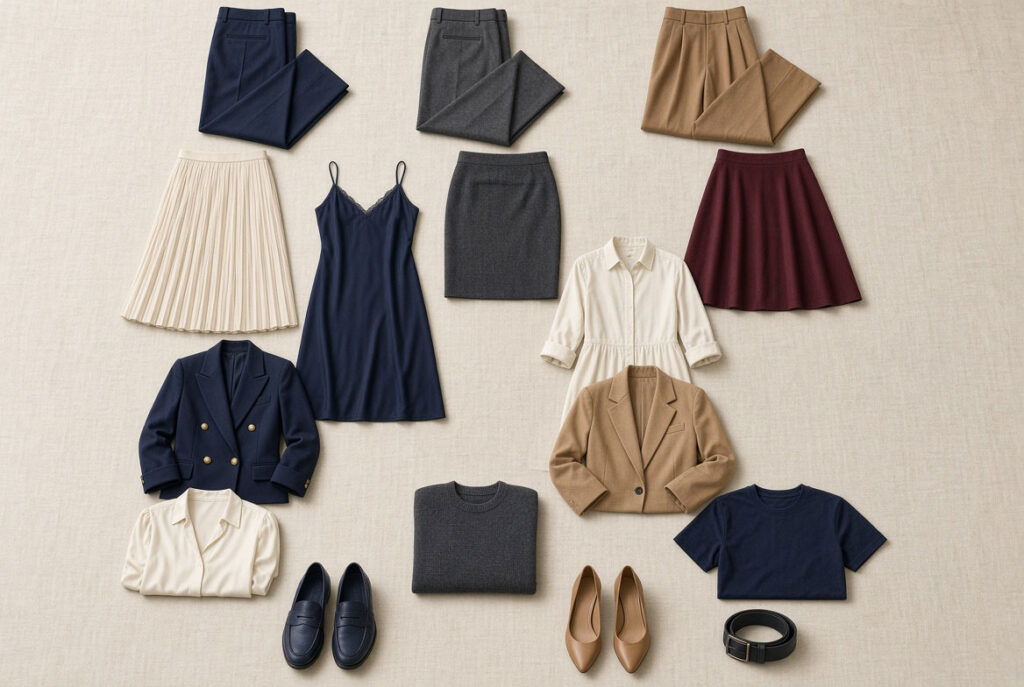
Modules are small groups of clothing that all work together, designed around specific parts of your week. A cohesive color palette simplifies wardrobe choices and planning, so each module stays within a tight color story.
A simple module formula: 2 bottoms + 3 tops + 1 layering piece + 2 pairs of shoes, all in coordinating neutral tones with one accent.
Two examples:
- Presentation Days module (navy/ivory/camel): tailored trousers, a midi skirt, two blouses, one fine-gauge knit, a navy blazer, loafers, and kitten heels.
- Casual Fridays module (black/charcoal/olive): dark denim or ponte pants, elevated tees or knits, a relaxed blazer, and ankle boots or sleek sneakers if your office allows them.
Multiple modules link together. You might have one work module, one weekend-smart-casual module, and a small event-ready module for networking dinners or social settings.
Before shopping, sketch your modules on paper or in a digital board. This mirrors the closet planning techniques a stylist uses to build a cohesive wardrobe.
Step 6: Focus On Fit, Tailoring, And Comfort
Fit and comfort matter more than chasing trends, especially after seasons of remote work. Clothes that don’t fit properly won’t get worn, no matter how fashionable they are.
Key fit checkpoints for women’s workwear:
- Shoulder seams on blazers and jackets align with the edge of your shoulders-no pulling or drooping.
- Waistband comfort when sitting for hours. If your work pants pinch in a chair, the fit is wrong.
- Smooth drape over hips without clinging or gaping.
- Midi skirt length hits mid-calf without chopping the leg line. A defined waist in dresses and skirts creates proportion.
Common alterations that make a big difference:
- Hemming tailored trousers to the right length for your shoes (flat vs. heel height matters).
- Taking in the waist slightly on dresses or skirts.
- Shortening sleeves on blazers for proper proportion.
Stretchy but structured fabrics like ponte keep you comfortable during long workdays without sacrificing clean lines. And tailoring is completely normal-it’s not a sign that something doesn’t fit. It’s a sign you care about looking your best. At Style Fix Studio, we regularly build tailoring into wardrobe makeover plans so clients walk away with pieces that genuinely work.
Step 7: Smart Shopping Strategy For Your Back To Work Reset
Once gaps are identified, create a focused shopping list instead of impulse-buying random pieces. Break it into tiers:
- Must buy before September: a blazer, foundational tailored pants, comfortable work shoes-the items that get daily wear.
- Nice-to-have by November: outerwear, a second pair of trousers, seasonal prints.
- Can wait for sales: accent pieces, trendier tops, fashion accessories.
Choose a main neutral (black, navy, or charcoal) plus 1–2 secondary neutrals (ivory, camel, gray) and one accent color like burgundy or forest green. This keeps everything in versatile colors that mix and match.
| Invest more | Save more |
|---|---|
| Blazers and jackets | Simple layering tees |
| Tailored trousers | Trendier tops and prints |
| Coats and outerwear | Cotton poplin button-downs |
| Shoes with cushioning | Scarves and seasonal accessories |
Consider sustainable wardrobe choices: shop consignment or secondhand for classic items, and prioritize fewer, better pieces that work in multiple casual outfits and polished looks alike. Structured bags add sophistication to work outfits-one quality structured tote that fits a laptop is worth more than three flimsy purses.
If the sourcing feels like too much, virtual styling services can handle the shopping list and outfit building for you. Check out our personal styling packages to see what’s right for you.
Step 8: Seasonal Layering Pieces That Make Every Outfit Look Polished
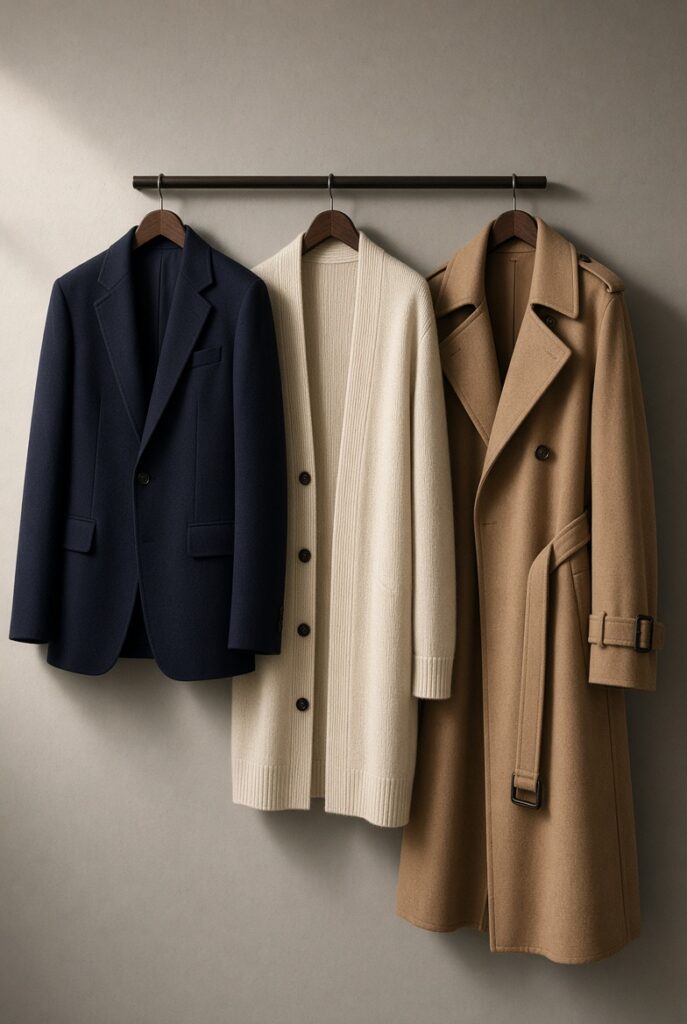
Layering pieces are the fastest way to elevate a simple base outfit into polished office wear, and they’re non-negotiable when temperatures drop in Boston. Layering pieces help regulate comfort in fluctuating office temperatures-from an overheated conference room to a chilly commute.
Essential layers for fall and winter:
- A single-breasted blazer in navy, black, or charcoal. This is your hardest-working piece.
- A longline cardigan in merino or cotton blend that skims the body without bulk.
- A trench coat or belted wool coat for commutes and client meetings.
- A lightweight shell or camisole for wearing under slightly sheer blouses or itchy knits.
How layering shifts formality:
- Blouse + tailored trousers = clean, relaxed baseline.
- Add a camel blazer + loafers = elevated, presentation-ready.
- Swap the blazer for a soft cardigan = approachable, creative-casual tone.
Crisp button-down shirts are essential for business casual and layer beautifully under blazers and cardigans. The same shirt looks completely different depending on what you pair it with-that’s the power of layering pieces in a well-built wardrobe.
Step 9: Shoes And Accessories That Work All Day
Shoes can make or break both comfort and polish. Many women returning to office life after years of sneakers need realistic options that won’t destroy their feet by 2 p.m.
Go-to shoe types for a business casual wardrobe:
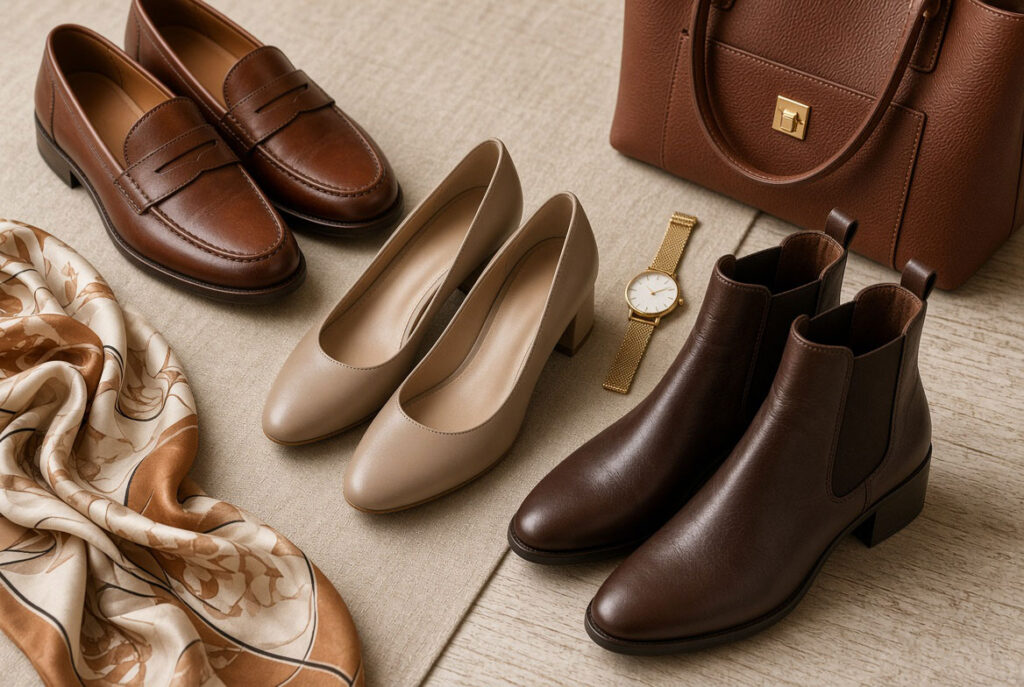
- Leather loafers with cushioned insoles-loafers and classic flats are ideal for all-day wear and remain the most versatile office shoe in 2026.
- Low block heels or kitten heels (no more than 2–2.5 inches) for presentations and client-facing days.
- Ankle boots with almond toes for fall and winter, worn with trousers or skirts.
- Optional sleek, minimal sneakers if your dress code allows casual outfits on certain days.
Comfortable shoes like loafers are essential for all-day wear, and comfortable footwear is essential for commuting-especially if you’re walking to the T or navigating Boston sidewalks.
Color strategy: black or dark brown for formality, cognac or taupe to soften outfits. Match shoe depth to your hosiery or trousers for a longer leg line.
For accessories, keep it intentional. Accessories elevate basic outfits and add personality without complicating your morning:
- An everyday watch and simple hoops or studs
- One structured tote or satchel that fits a laptop
- A silk scarf in your best colors for a quick style upgrade (here’s how to accessorize an outfit with more detail)
Avoid heavy statement pieces that tangle or bags that don’t support a hybrid workday. Function and fashion should balance.
Step 10: Color, Print, And Personal Style In A Professional Setting
A restrained color palette makes getting dressed faster, but wearing your best colors near your face boosts confidence and energy. At Style Fix Studio, we offer color analysis to help clients discover whether cooler or warmer tones-and which neutrals (navy vs. black vs. soft gray)-flatter them most. Understanding your personal style and body shape makes every purchase more effective.
Start with neutral colors as your foundation: black, navy, charcoal, camel, ivory. Layer in prints like subtle stripes, houndstooth, or a floral midi skirt that still reads professional.
Simple ways to add personality within a business casual setting:
- A colorful blouse under a navy blazer
- A patterned scarf with an otherwise monochrome suit
- A statement belt with classic work clothes to create a defined waist
Keep bolder prints to one piece per outfit so the overall look stays polished and office-ready. One printed pencil skirt with a solid top is interesting. A printed skirt, printed blouse, and patterned shoes is chaos.
Step 11: Time-Saving Routines For Stress-Free Work Mornings
Even the best office wardrobe fails if outfits are decided at 7:15 a.m. while packing lunches or rushing for a train.
What actually works:
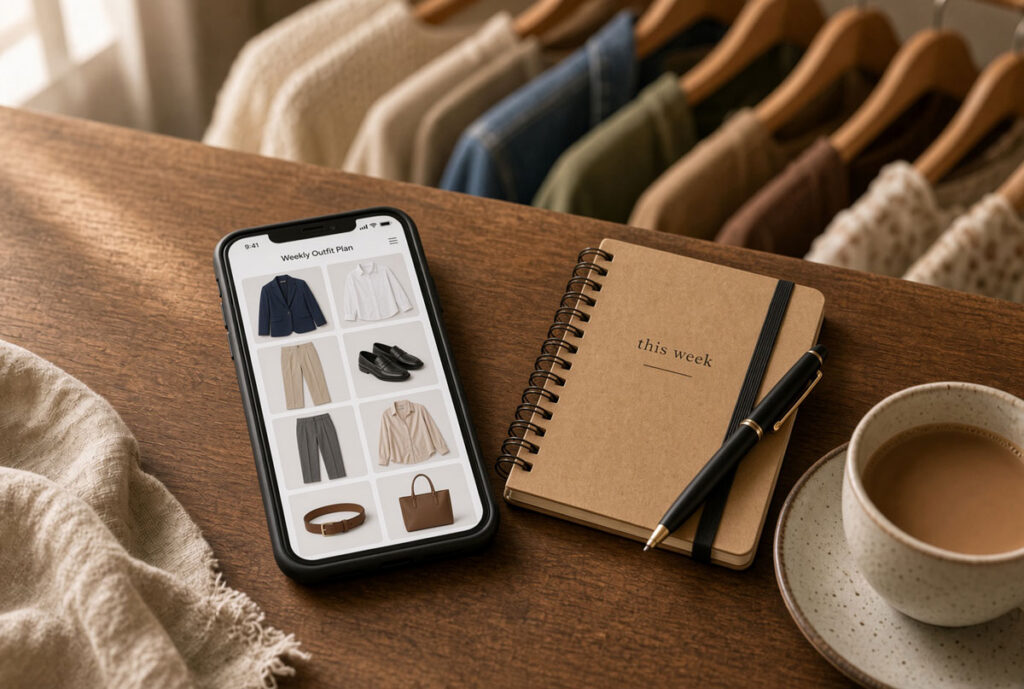
- Sunday prep session (15 minutes): assemble and hang 3–5 complete outfits-including shoes and accessories-on labeled hangers or a small outfit rail at the front of your closet.
- Phone lookbook: save 10–15 mirror selfies of your go-to business casual outfits in a dedicated album. On tired mornings, scroll and copy.
- Front-of-closet staging: keep only this week’s looks visible. Everything else stays behind them. Zero thinking required beyond grabbing a hanger.
This planning habit pairs perfectly with a curated capsule. At Style Fix Studio, we often create digital lookbooks for clients after wardrobe makeovers, so this step becomes effortless from day one.
Step 12: When To Bring In A Personal Stylist (And How Style Fix Studio Helps)
If you feel stuck-unsure what flatters your body now, confused about your dress code, or overwhelmed every time you walk into a store-a professional stylist can save time, stress, and money. Initial consultations can help tailor wardrobe advice to individual needs, which is why we offer them free.
Here’s how Style Fix Studio supports a back to work wardrobe reset:
- Closet audit and wardrobe makeover: we edit what you own, create outfits from existing clothing, and identify gaps. Learn more about our Wardrobe Makeover.
- Color analysis and body shape analysis: we pinpoint the most flattering silhouettes and shades for your women’s workwear.
- Personal shopping: in Boston or virtually, we source the exact key pieces-blazers, tailored trousers, midi skirts, layering pieces-your wardrobe is missing. Explore personal shopping with a try-on session.
- Virtual try-on sessions: refine fit, style, and comfort for real workdays from anywhere nationwide.
- Professional photoshoot styling: if you need updated LinkedIn or corporate headshots, we style those too.
Services are available locally around Boston, MA, and virtually nationwide. You can schedule a free initial consultation to get started.
Fall 2026 is the perfect time to step into a refreshed, streamlined office wardrobe that reflects who you are now-not who you were three years ago. You don’t need to overhaul everything. You need the right pieces, in the right fit, styled with intention. That’s what a wardrobe reset is all about.
Frequently Asked Questions
What does business casual mean for women in 2026?
Business casual for women in 2026 means tailored separates — trousers, blazers, blouses, midi skirts — that look polished without feeling stiff. It sits between strict corporate suiting and smart casual, with room for color, texture, and personal style depending on your specific office.
How many outfits do I need for a work capsule wardrobe?
Most women need 5–10 mix-and-match business casual outfits built from 10–15 key pieces in a coordinated neutral palette. That’s enough variety for a full work week plus client meetings, without a closet full of one-off items.
How much does a personal stylist or wardrobe makeover cost?
Pricing depends on the scope — a closet audit alone costs less than a full wardrobe makeover with personal shopping. Style Fix Studio offers a free initial consultation to walk through options and give you an exact quote for your needs.
What are the essential pieces for a business casual capsule wardrobe?
The core list includes 2–3 pairs of tailored trousers, 2 midi skirts, 2 dresses, 2 blazers, 3–4 versatile tops, 1–2 layering pieces, and 3 pairs of shoes (loafers, ankle boots, low heels), all in a coordinated neutral palette.
How do I know if my office dress code is strict business casual or smart casual?
Watch what senior leaders wear on presentation days, check any written HR guidance, and compare what people wear for client visits versus regular team days. Strict business casual leans tailored and closed-toe; smart casual allows dark denim and more relaxed basics.
When should I hire a personal stylist for a wardrobe reset?
It’s worth bringing in a stylist if you’re unsure what flatters your current body, confused about your dress code, or find yourself overwhelmed every time you shop. A stylist can shortcut the closet audit, color analysis, and shopping process into one guided plan.