

Certified Personal Stylist & Owner of Style Fix Studio in Boston, MA
Closet Audit | Color Analysis | Personal Styling
StyleFixStudio.com
By the end of this body type style guide, you’ll easily identify your body type, master the best silhouettes for your body shape, and confidently make these styling rules your own.
Style can feel like so many things at once – exciting, confusing, personal, and sometimes overwhelming. If you’ve ever stood in front of a mirror wondering why a trendy outfit looks incredible on someone else but just doesn’t work on you, you’re not alone. Many women experience this, and it rarely has anything to do with size, age, or weight. It almost always comes down to proportions.
At Style Fix Studio, we work as personal stylists with clients of every shape, size, and stage of life. And one thing we tell every single person: dressing for your body type is about creating visual balance, not hiding or “fixing” your own body. Your body doesn’t need fixing. Your wardrobe choices just need a little direction.
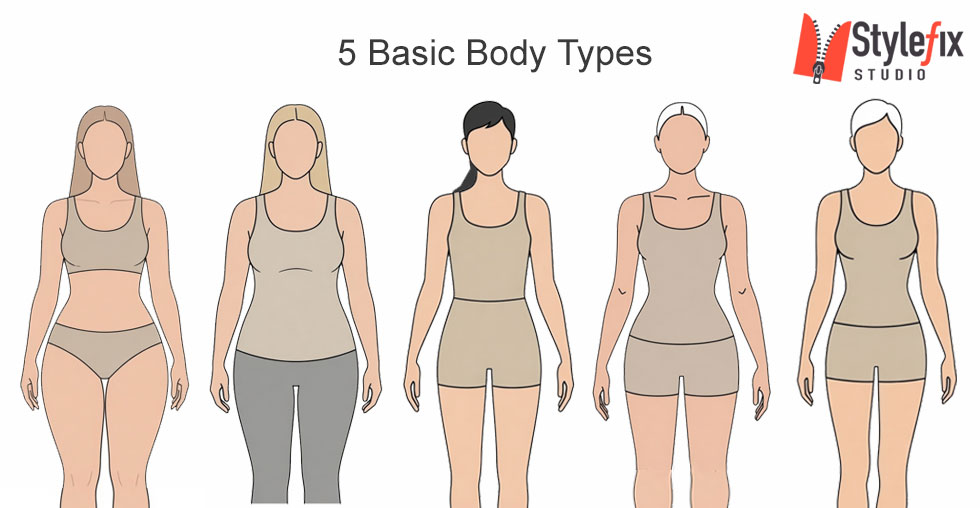
This guide covers the 5 body types – hourglass shape, pear shape, rectangle, apple shape, and inverted triangle – because they’re the clearest starting point for everyday dressing. Keep in mind that bodies change over time through pregnancy, menopause, weight shifts, and even lifting weights. Your body shape can shift too, and that’s completely normal.
Whether you’re in Boston or anywhere in the U.S., our online personal styling services can give you 1:1 help with style tailored to your proportions, lifestyle, and personal style. By the end of this guide, you’ll know how to identify your body type, how to dress for your body shape, and how to make these tips your own.
Body Type vs Body Shape: The Foundation of Proportion
The terms “body type” and “body shape” are often used interchangeably. In this guide, both refer to how width and curves are distributed across your shoulders, bust, waist, and hips.
Proportion is simpler than it sounds: it’s where visual weight sits on your frame. If your hips are noticeably wider than your shoulders, the lower body carries more visual weight. If your shoulders are broad and your hips are narrow, the upper body dominates. Styling for body types is about creating balance between these areas – not shrinking or camouflaging any part of you.
A few important notes:
- Height (petite vs tall), age, and plus-size styling don’t change your body type category. They affect how lengths, scale, and fabrics are chosen.
- Our stylists consider both horizontal body shape (shoulders vs hips) and vertical proportions (torso length vs legs) in every wardrobe makeover and closet audit.
Every body shape is normal. Every shape deserves great style.
Understanding Your Body Shape: How to Measure and Map Your Proportions
Ready to find your shape? Grab a tape measure and take four key measurements:
- Shoulders: measure around the widest point across your back
- Bust: wrap the tape around the fullest part of your bust
- Waist: find the narrowest point above your belly button (your natural waist)
- Hips: measure around the fullest part over your seat and upper thigh
Write down your measurements for easy reference while shopping. Then compare your measurements to identify your body shape category:
| If your measurements look like this… | Your shape is likely… |
|---|---|
| Hips and bust similar, waist much narrower | Hourglass |
| Hips noticeably wider than shoulders | Pear (triangle) |
| Midsection widest, with slimmer legs | Apple (round/oval) |
| Shoulders, waist, and hips roughly equal | Rectangle |
| Shoulders or bust broader than hips | Inverted triangle |
Exact numbers don’t have to be perfect. Choose the description that best matches how your clothing usually fits and where it tends to pull. Many people fall between types, and that’s expected – body shape types help guide clothing choices and proportions, not define you.
If you feel confused, a professional body shape analysis through our online styling help can clarify everything.
The 5 Body Types: Style Principles and Outfit Ideas
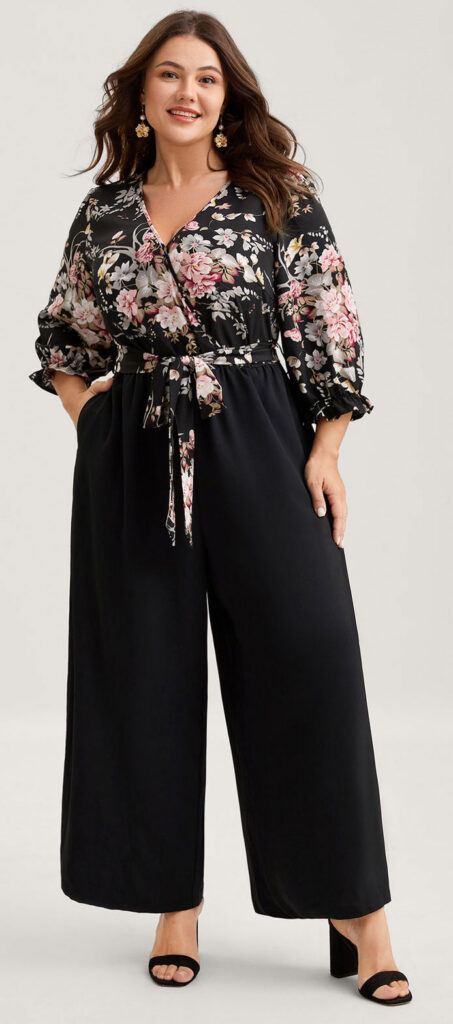
Below, each body type gets specific styling goals, key silhouettes, and outfit examples. These are guidelines, not rules – comfort, context, and personal style always come first. Plus-size styling follows the same proportion logic; differences are mainly about fabric weight, support, and fit precision. For deeper plus-size guidance, see our personal styling for plus size women guide.
Hourglass Body Shape: Follow Your Natural Lines
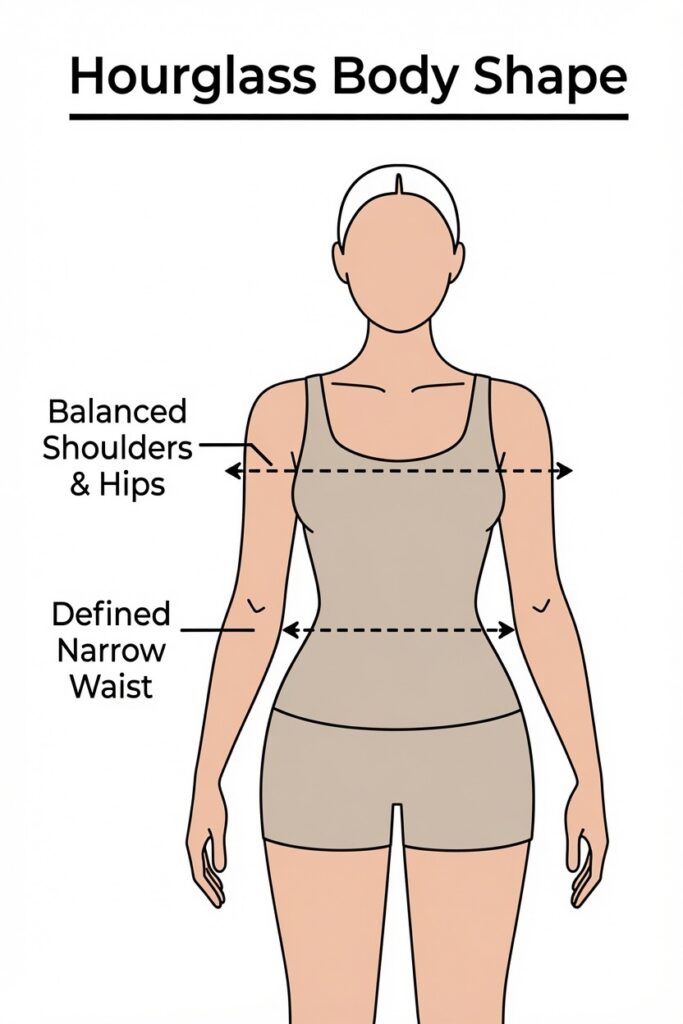
The hourglass figure features shoulders and hips roughly the same width with a clearly defined waist. Think Marilyn Monroe or Sofía Vergara as visual anchors. Hourglass shapes benefit from fitted styles and defined waists that support the natural curves rather than hiding them.
Styling focus: Follow your body lines and keep the waist emphasis visible. Avoid boxy or shapeless styles that lack structure and obscure your natural balance.
- Tops: wrap tops, V-neck blouses, structured knit tops that skim (not cling), fitted blazers nipped at the waist
- Bottoms: high-waisted pants in straight-leg or bootcut, pencil skirts, bias-cut midi skirts
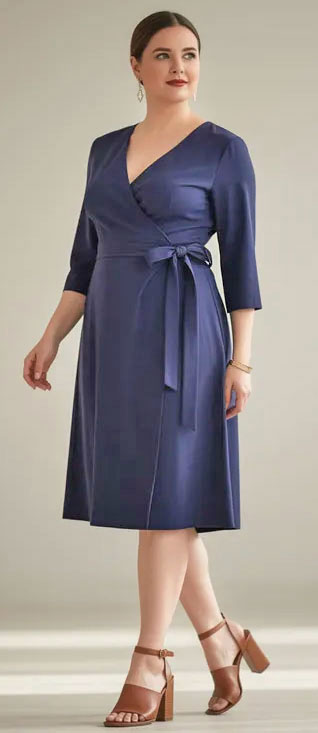
- Dresses: wrap dresses (they define the waist beautifully), fit-and-flare, sheath dresses with waist seaming, belted shirt dresses
Belts can create a defined waist and enhance hourglass silhouettes – choose substantial widths that mark the waist without flattening curves. For plus-size hourglass frames, slightly heavier fabrics with stretch provide support, and wider belts maintain proportion.
Pear Shape (Triangle): Balance from the Hips Up
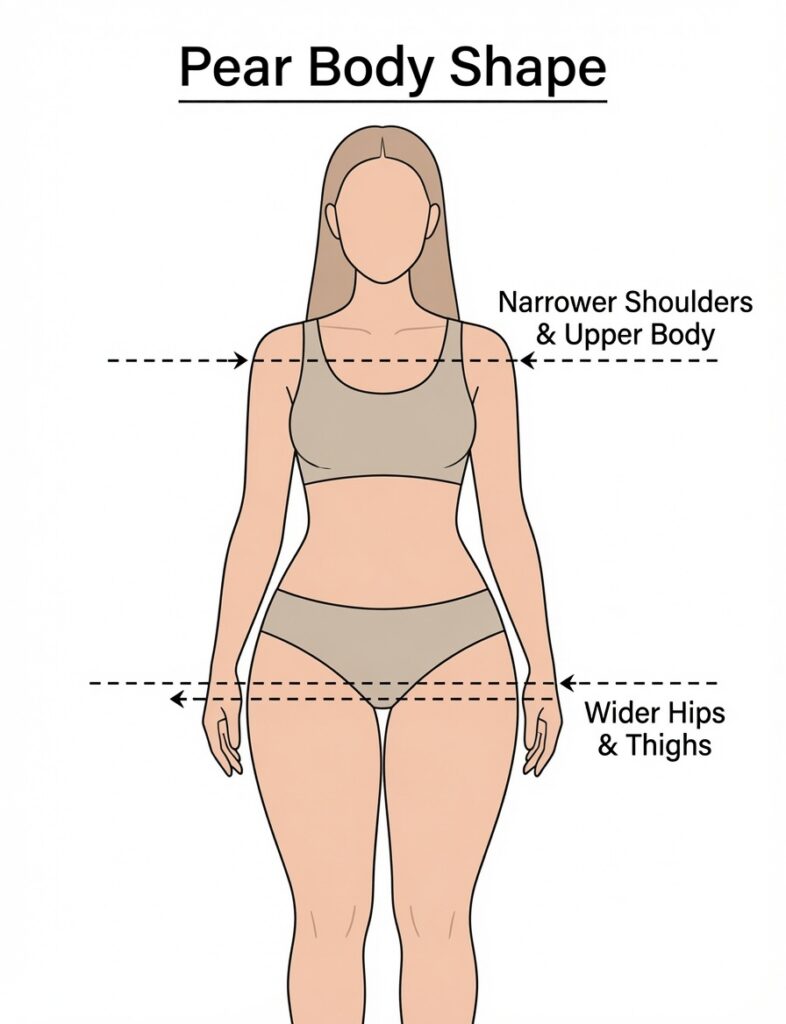
A pear shape features hips that are wider than shoulders, often with narrower shoulders and a well-defined waist. Beyoncé and Jennifer Lopez are classic references.
Styling focus: Create balance by drawing the eye upward and defining the waist. Structured tops balance the silhouette for pear shapes.
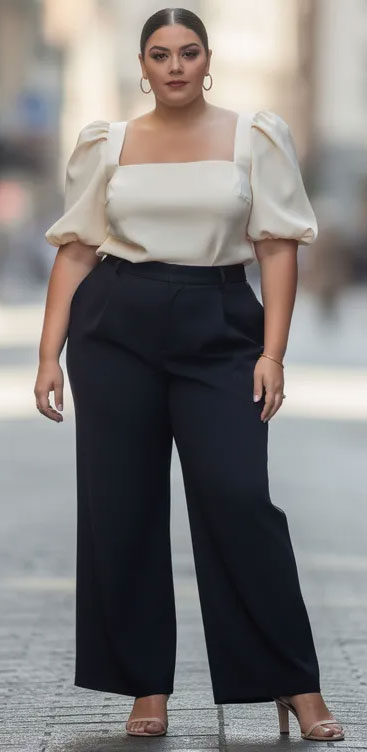
- Tops: boat necks, square necklines, puff or statement sleeves, structured blazers, light or bright colors on top. Even shoulder pads in a blazer can even her shoulders with her hips.
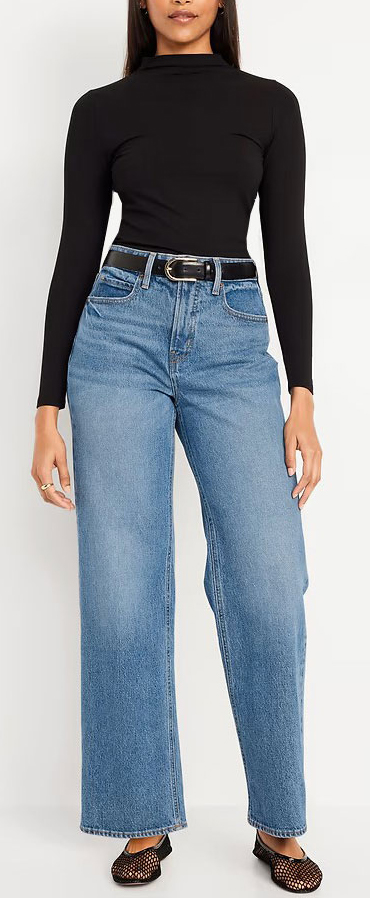
- Bottoms: darker, clean-lined trousers (to minimize a body part, wear dark colors and matte textures), wide-leg or straight-leg jeans, A-line skirts that skim over the hips
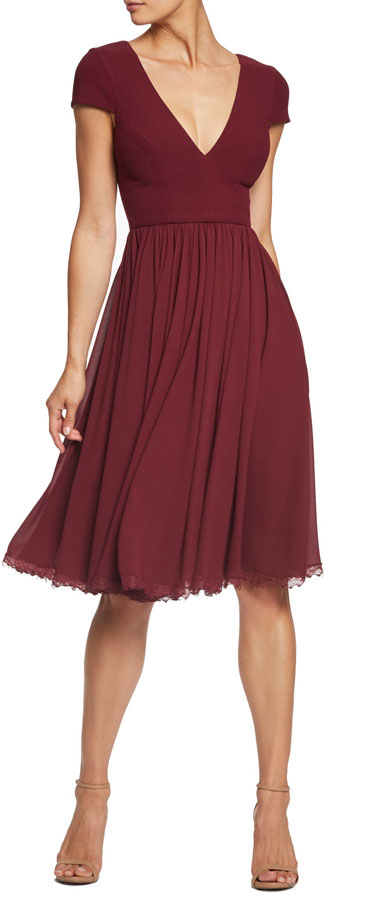
- Dresses: A-line dresses, fit-and-flare, off-the-shoulder styles that spotlight the upper body
Pear shapes should avoid clingy bottoms and skinny jeans if balance is the goal – though they’re perfectly fine if that’s the look you want. A-line skirts are recommended for pear-shaped bodies because they follow the hip curve and release gently.
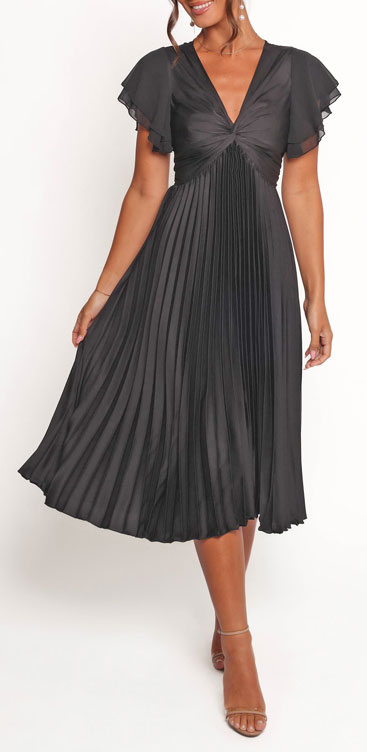
Apple / Round / Oval Shape: Create Length and Gentle Structure
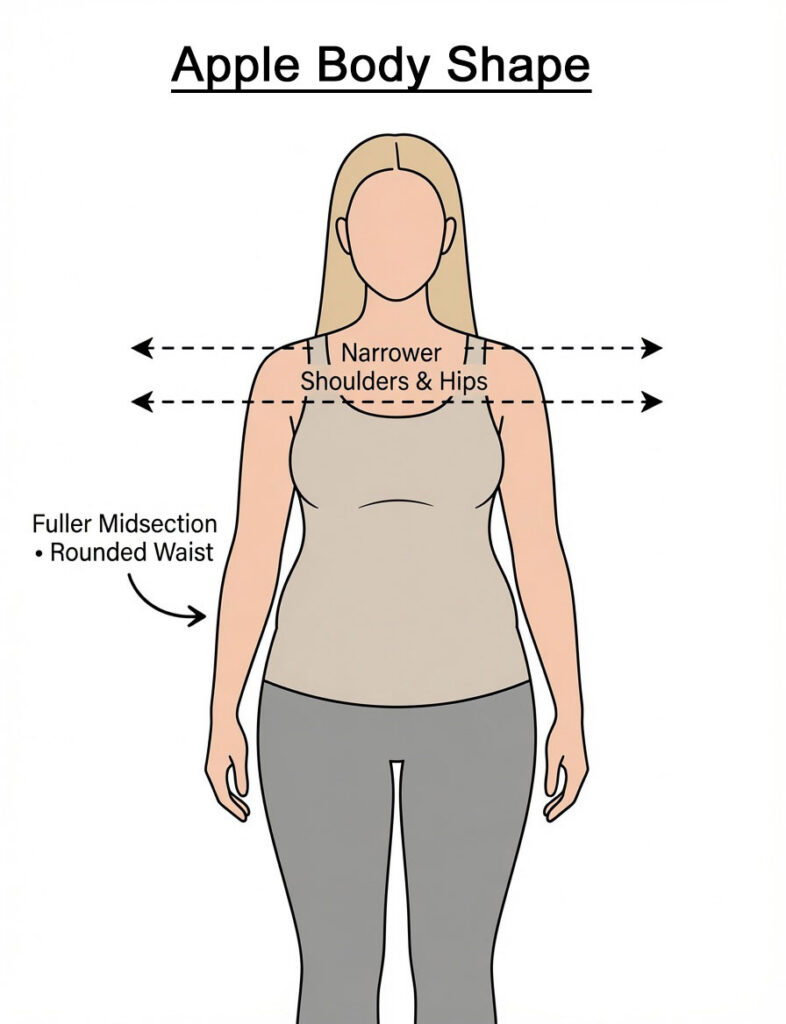
The apple shape has a fuller midsection with slimmer legs and often a fuller bust. The waist area has little waist definition compared to other shapes.
Styling focus: Create vertical lines, length, and gentle structure through the torso while showcasing your legs and neckline. Think elongation, not compression.
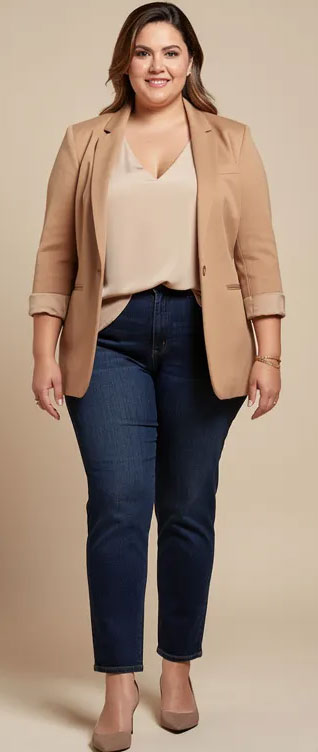
- Tops: V-neck and scoop necks, soft wrap styles, tunic tops (they work beautifully for apple-shaped figures with fuller midsections), lightweight longline cardigans, open blazers
- Bottoms: slim or straight-leg jeans, tailored ankle-length pants that show the ankle, skirts at the natural waist
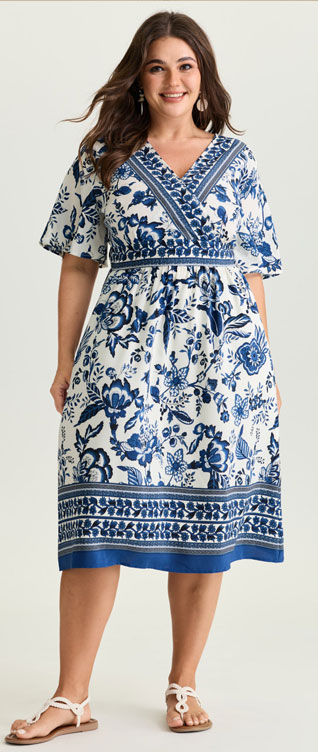
- Dresses: empire waist dresses (they cinch just under the bust and float away from the midsection), soft A-line dresses, column dresses with vertical seams
For plus-size apple shapes, prioritize breathable fabrics with drape – not cling. Apple shapes look great in tunic tops and A-line dresses that create a natural silhouette without restriction. Consider shaping undergarments only if they increase comfort, not as a requirement.
Rectangle Body Shape: Add Definition and Dimension
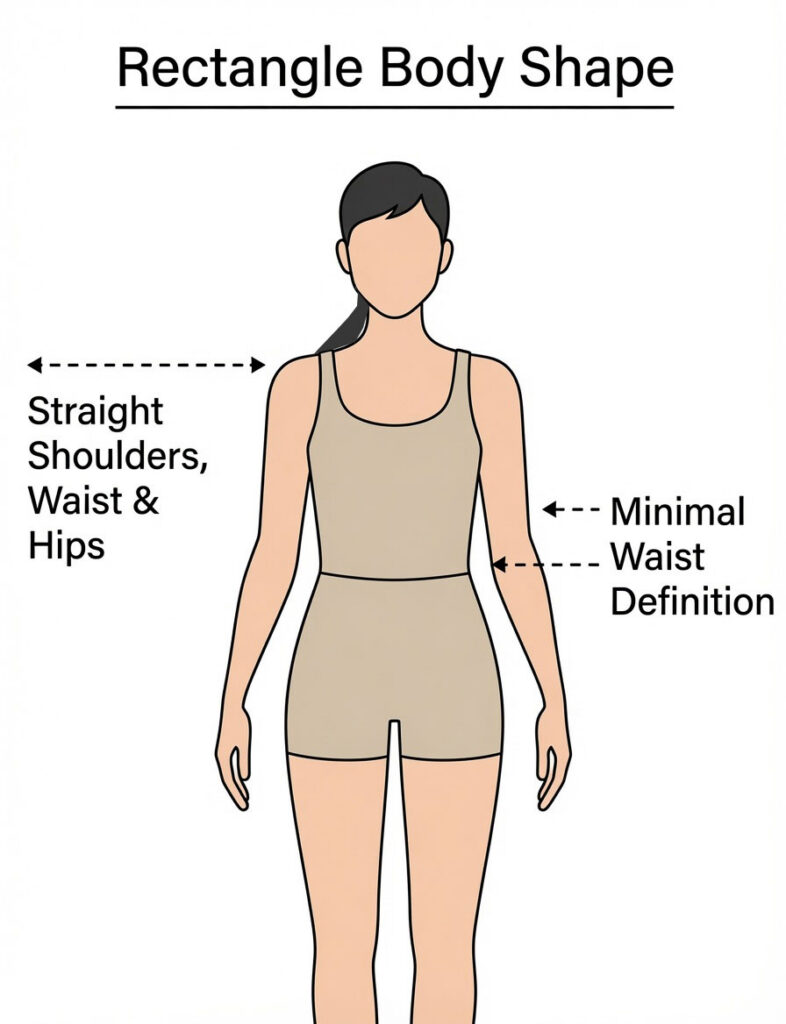
A rectangle shape has similar shoulder and hip widths with little waist definition – the shoulders and hips are close in width, and the torso runs fairly straight. Athletic builds are common here.
Styling focus: Create the illusion of curves and waist definition through texture, layering, and strategic details.
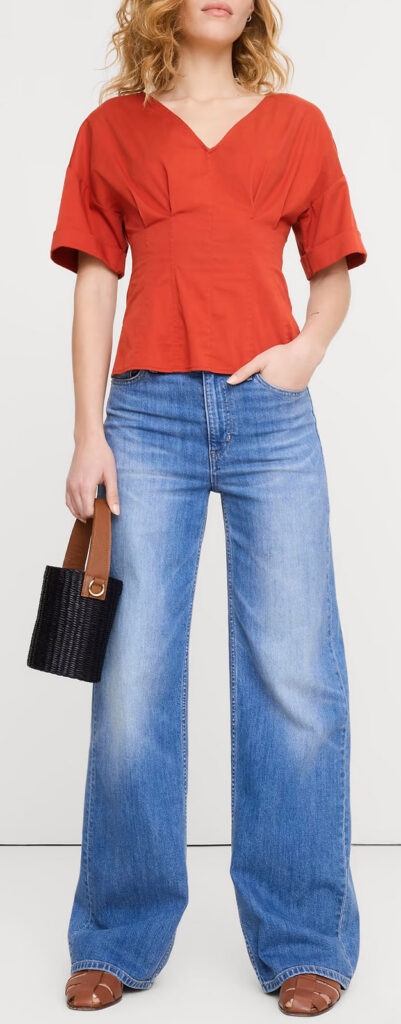
- Tops: rectangle shapes need peplum tops to add waist definition, wrap tops, cropped jackets, shirts that can be belted, tops with ruching at the waist
- Bottoms: high-rise jeans and trousers, paperbag-waist pants, tapered or bootcut jeans, skirts with volume (pleated, tiered, or A-line)
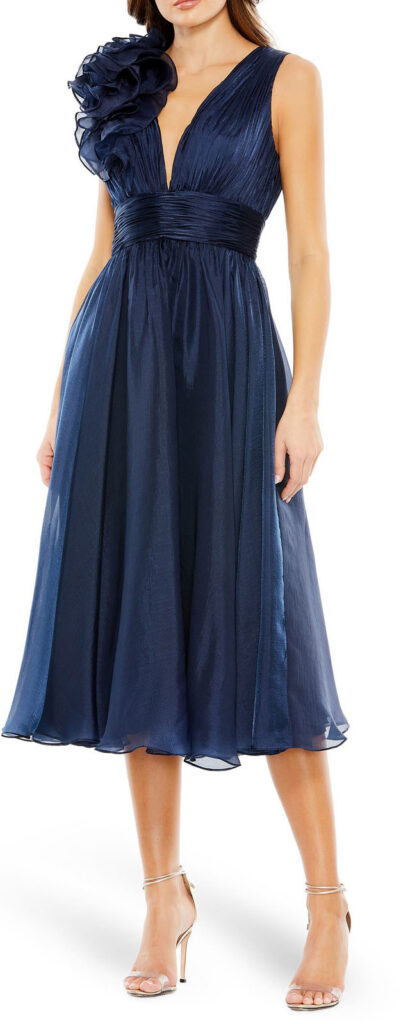
- Dresses: fit-and-flare, bodycon with strategic seaming, shirt dresses cinched with a belt
If you’re a minimalist who dislikes ruffles, use strategic belts, seam lines, and color-blocking to find the best silhouette without overt frills. Peplum tops add definition for rectangle body shapes by creating a visual curve at the hip line.
Inverted Triangle Body Shape: Ground the Upper Body
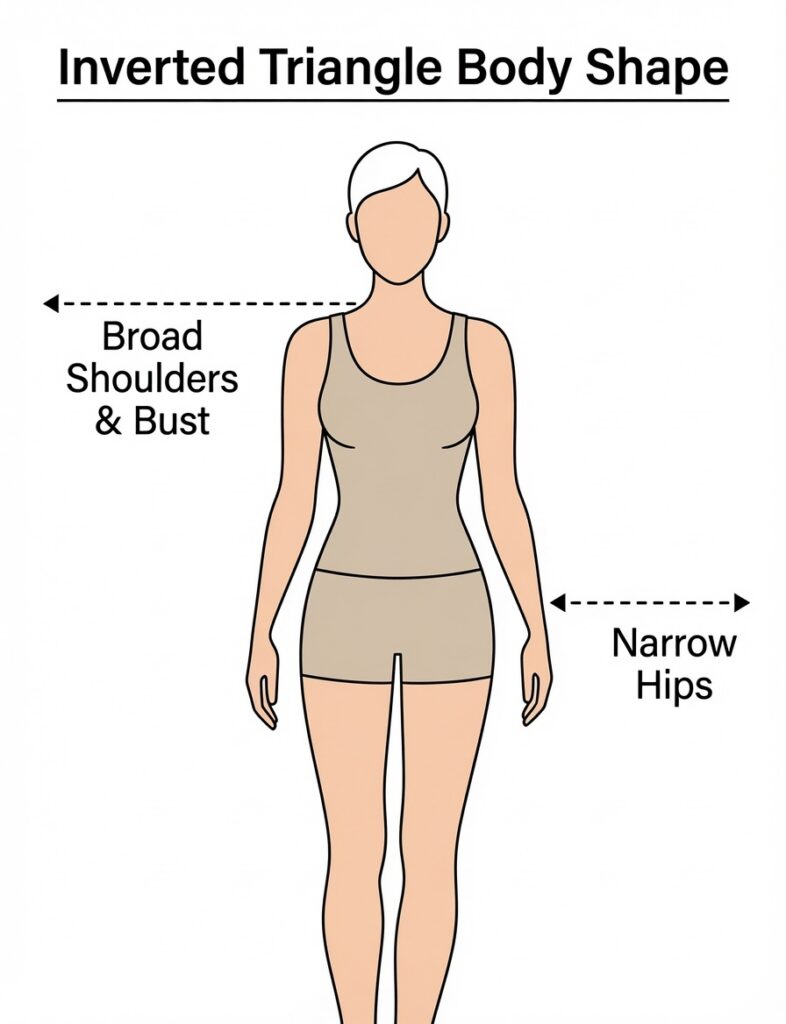
The inverted triangle has broader shoulders than hips, with the lower body comparatively narrower. Naomi Campbell is a useful visual reference. Sometimes a fuller bust adds to the width of the upper body.
Styling focus: Keep the upper body simple and streamlined while adding volume, texture, or color below to ground the natural silhouette.
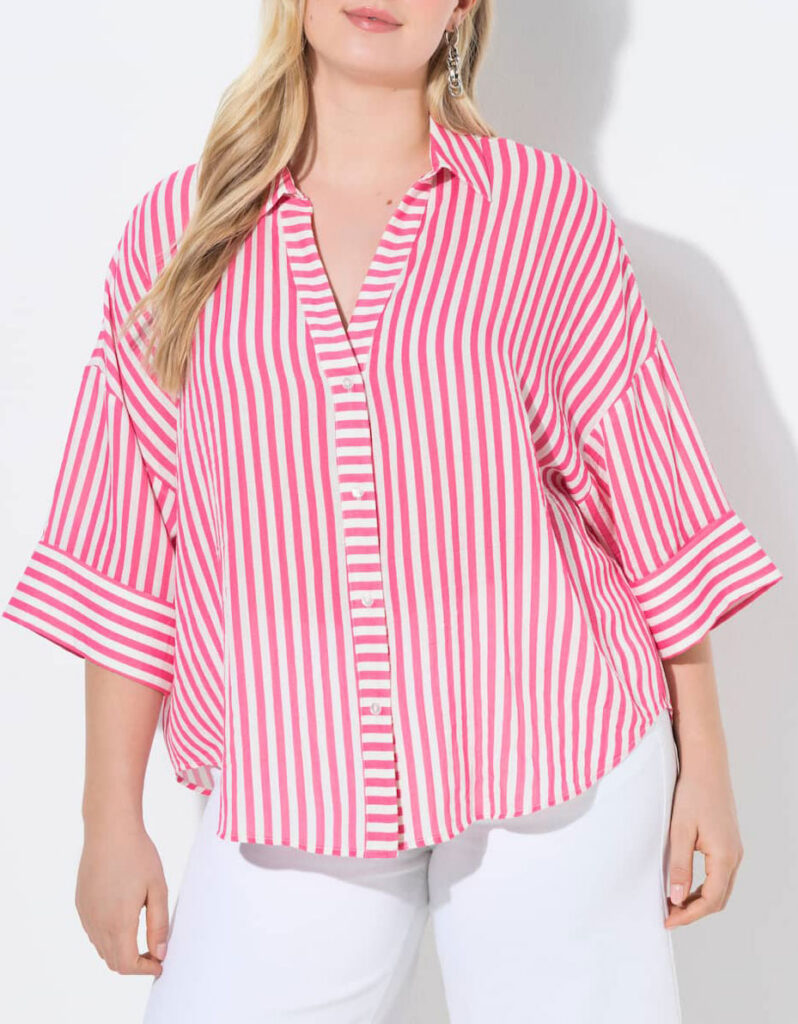
- Tops: clean V-neck styles, simple crew necks without excessive shoulder detail, raglan sleeves, softer fabrics that drape rather than stand rigid
- Bottoms: wide-leg pants, palazzo trousers, A-line skirts, cargo or barrel-leg jeans, bold colors and prints on the bottom to draw the eye down to the lower body
- Dresses: A-line dresses, wrap dresses with subtle shoulders, dresses with fuller skirts that feel balanced against the frame
Supportive bras that keep the bust lifted help clothing sit correctly and reduce the sense of heaviness up top. Ensure garments fit well in shoulders and hips to accommodate all body types – this is especially critical for the inverted triangle, where shoulder fit anchors everything.
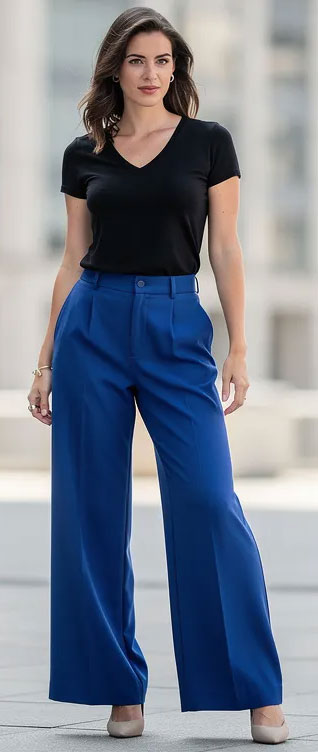
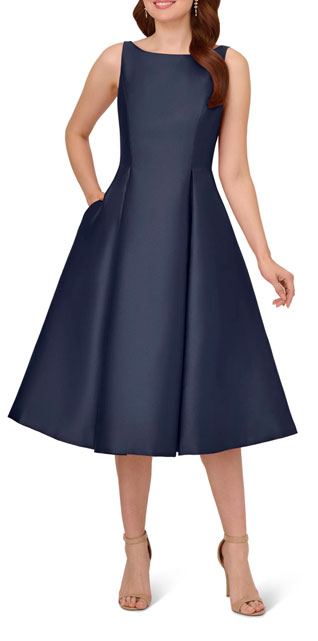
Proportion in Practice: How to Dress for Your Body Shape Day-to-Day
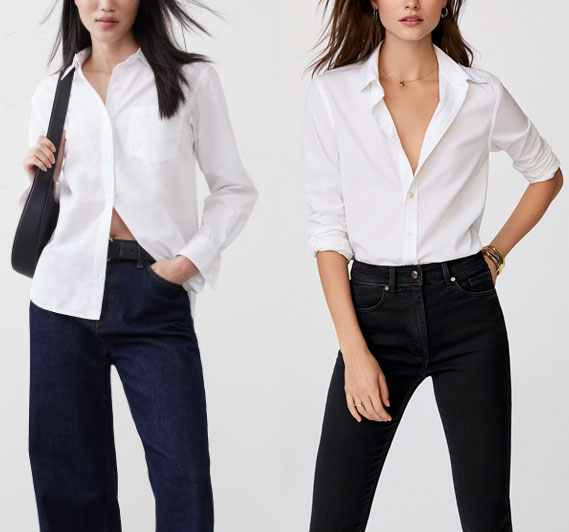
Once you know your body type, apply these proportion principles in real scenarios. Dressing for your body type involves understanding your proportions and using them across settings – corporate meetings, creative offices, school runs, date nights, or weddings.
Use the Rule of Thirds for flattering proportions by avoiding exact 50/50 splits. For example, a cropped jacket with high-waisted pants creates a one-third/two-thirds split that elongates legs. Small changes matter:
- Tucking vs untucking: tucking defines your waist; half-tucks work for round midsections
- Hem lengths: skirts above the knee lengthen legs; ankle crops balance a longer torso
- Shoe color: nude shoes elongate; contrasting shoes create a visual break
These are the exact principles we use in closet audits and personal shopping sessions to build mix-and-match outfits for real life. Guidelines are flexible – break them intentionally when it matches your mood and personality.
Plus-Size Styling and Inclusive Body Shape Tips
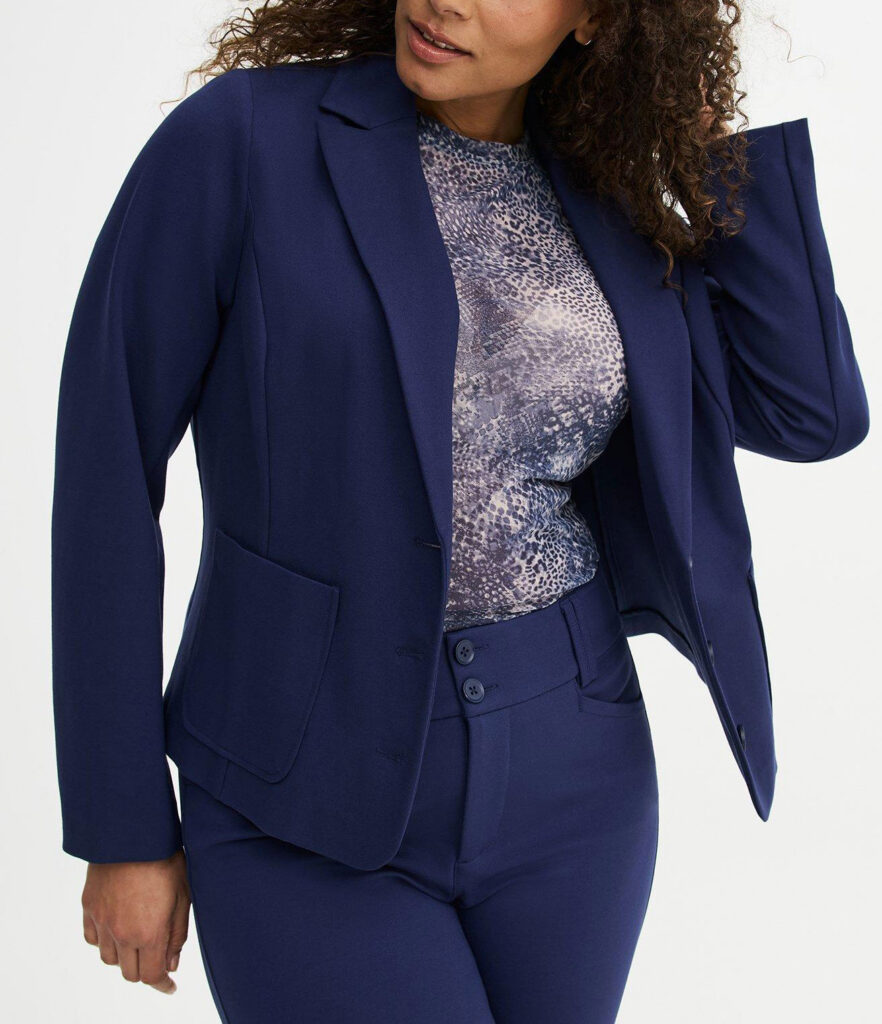
Key tips across all 5 body types for plus-size readers:
- Choose structured knits and mid-weight fabrics with good stretch, avoid overly flimsy materials that lack structure
- Ensure shoulders fit properly to anchor garments and create clean body lines
- Prioritize breathable fabrics with drape for comfort around the midsection
- Invest in supportive undergarments that feel good, not restrictive
Common myths debunked: plus-size women don’t need to always wear black or hide their arms. Colors, prints, and skin exposure are personal choices rooted in confidence, not obligation.
For specialized guidance, explore our plus-size styling tips or connect with a plus-size stylist.
How an Online Personal Stylist Can Help You Dress for Your Body Shape
Working with an online personal stylist takes the guesswork out of everything above. At Style Fix Studio, our Online Personal Styling process includes a digital style questionnaire, body shape analysis from your photos and measurements, curated shoppable boards, and outfit formulas tailored to your lifestyle and budget.
Virtual styling is ideal for busy professionals, parents, and anyone outside Boston who wants online styling help without in-person appointments. We also integrate body shape knowledge into our Signature Wardrobe Makeover, color analysis, and professional photoshoots.
Real examples: a Boston-based attorney rediscovered her hourglass shape after maternity leave and rebuilt her work wardrobe around wrap dresses and tailored blazers. A remote software engineer used our online styling help to refine a plus-size work-from-home wardrobe that made her feel completely confident on video calls. Dressing for your body doesn’t require a full overhaul – sometimes it starts with one great-fitting piece.
Frequently Asked Questions About Body Types and Personal Style
Can my body type change over time?
Yes. Pregnancy, menopause, weight shifts, and exercise can all redistribute where your body carries width. Reassessing your shape periodically keeps your wardrobe choices current.
What if I feel like more than one body shape?
That’s common. Many women measure between categories. Focus on the shape that best describes where clothing fits or pulls on your figure, and blend tips from adjacent types.
Is height the same as body type?
No. Height affects scale (hemlines, pattern size, accessory proportions) but not your body shape category. A petite pear and a tall pear use the same balance strategies at different scales. Kibbe body types, another system, blends height and bone structure-but the five shapes here focus purely on horizontal proportions.
Do body type tips still apply if I wear plus sizes?
Absolutely. The same proportion logic applies. Fabric, fit precision, and support details simply get more attention.
Do I have to dress to balance my shape?
Not at all. These are tools, not mandates. Wear what makes you feel good in your own skin. Understanding your body shape enhances dressing confidence, but rules are made to be broken intentionally.
Have more questions? Book a free consultation with Style Fix Studio for personalized feedback.
Conclusion: Dress for Your Body, Express Your Personal Style

Understanding your body shape and proportions is about ease, confidence, and intentional choices – not perfection. You don’t need to measure every outfit against a formula. You just need to understand why some cuts make you feel balanced and others don’t.
Try one or two new silhouettes this week based on your body type. A wrap dress if you’re an hourglass, a structured blazer if you’re a pear, an empire waist dress if you’re an apple. Small experiments beat complete overhauls. Fit and proportion matter more than the number on the label – tailoring, thoughtful shopping, and an edited closet beat an overflowing, random one every time.
If you want expert, 1:1 help with style and body shape dressing, our online personal stylist services are here for you – wherever you are. Bookmark this guide as your go-to body type style guide, and revisit it whenever you shop or plan outfits. Your style should feel like you, not like a costume.